Showing posts with label Saarburg. Show all posts

Thursday, July 31, 2014

Biedermeyer Style for Saarburg's Middle Class

The Invention of Simplicity (Public Domaine)

This is an unusual subject for my blog which usually has focused on peasant life. However not every person in Kreis Saarburg was part of the peasantry or lower classes, In Saarburg, the largest city of the Kreis, there were houses designed for the upper and middle classes, like Nikolaus Valdenaire who had both an estate near Konz and a fine home in Saarburg called the Kuno Tower. These upper and middle classes interacted with the lower classes - buying their produce, hiring their children as servants and the adults as workers in the taneries or the bell factory, to name a few. To the people of the surrounding villages, Saarburg was an extraordinary place. This was where people who did not have to struggle just to feed their family lived in houses that seemed like palaces. Here you would find the doctors, the chemists, the government officials, the owners of factories. Their homes would be far different than the little farmhouses most of our own ancestors lived in, but they would also be nothing like the fine interiors of the dwellings of the nobles in cities like Bonn or Cologne. 

In Germany and Austria, the 19th Century saw the development of what is often called the Biedermeier period.  It was the time when the middle class began to grow and gain importance.  These were the years that started with Prussian rule in areas formerly French or independent city states.  It faded after the German revolution of 1848. This Biedermeier period influenced literature, music, and visual arts but especially interior design. The middle class enjoyed this humorous character, Biedermeier, in a period of strict government control. "Papa Biedermeier," a worthy, bourgeois-minded fellow was a humorous character featured in a running series of verses written by a country doctor and a lawyer. Gradually the name Biedermeyer came to represent the period when artists of all kinds, including architects and talented craftsmen, moved toward simplicity and moderation in their work. It was a mood rather than a strict period of time, says an article from Wikipedia. 


A Biedermeier style room for coffee or card playing 

Compared with the Empire furniture style of the nobility before and during the time of Napoleon, the rising middle class chose a new direction. The furniture used a style that emphasized the grain of the wood rather than having elaborate carving and curlicues. Pale woods like pear, birch or cherry woods were preferred over the darker woods like mahogany. 


The comparative emptiness of furniture in this room is also typical of the middle-class Biedermeier style although sometimes there was imitation of the costly techniques that were used for the furniture and floors of the upper class. Expensive inlay work, for instance, could be imitated very easily by using a stencil of the pattern to stain floors or furniture.

This library table's legs have a somewhat extreme curve

The Biedermeyer period can be applied to many fields - literature, music, and visual arts. A library where books could be kept and read by members of a middle class family tended toward the writings of the Biedermeyer writers. Biedermeier designs were simplified forms of the French Empire, Directoire  and some 18th-century English styles, and were often elegant in their utilitarian simplicity. Chairs and sofas show curved lines, frequently graceful, but sometimes exaggerated into swellings and contortions. Light-colored native fruitwoods were once again used in this library, with contrasting bands of black lacquer which often effectively substituted for the costly ebony of Empire pieces. 

Lamp and artwork are 21st century Biedermeier

Biedermeier designs could be quite simple.  At their best, cabinets and other large pieces were handsome and severe in line and surface.

The typical Biedermeier high bedposts are imitated in this modern day design

I am certain that my Kreis Saarburg ancestors never lived in a house furnished in the Biedermeier style.  But since middle class families often had enough money for servants, my 2nd great grandmother or one of her sisters or one of your ancestors could have worked in a Biedermeier dwelling for the time before their marriage, helping them to afford to buy more modestly made chests and cabinets filled with the things needed for their simple dowry.  They would have dusted and polished the Biedermeier curves of the pear wood furniture, the like of which they knew they would never own.

Sources:
"Biedermeier." The Columbia Encyclopedia, 6th ed.. 2013.
Freilichtmuseum Roscheider Hof Konz Museum Guide.
http://www.classicaladdiction.com/2011/06/biedermeier-yesterday-and-today/
http://en.wikipedia.org/wiki/Biedermeier

Thursday, July 05, 2012

Early Posts Remembered


Wedding  Document from Hunsruck


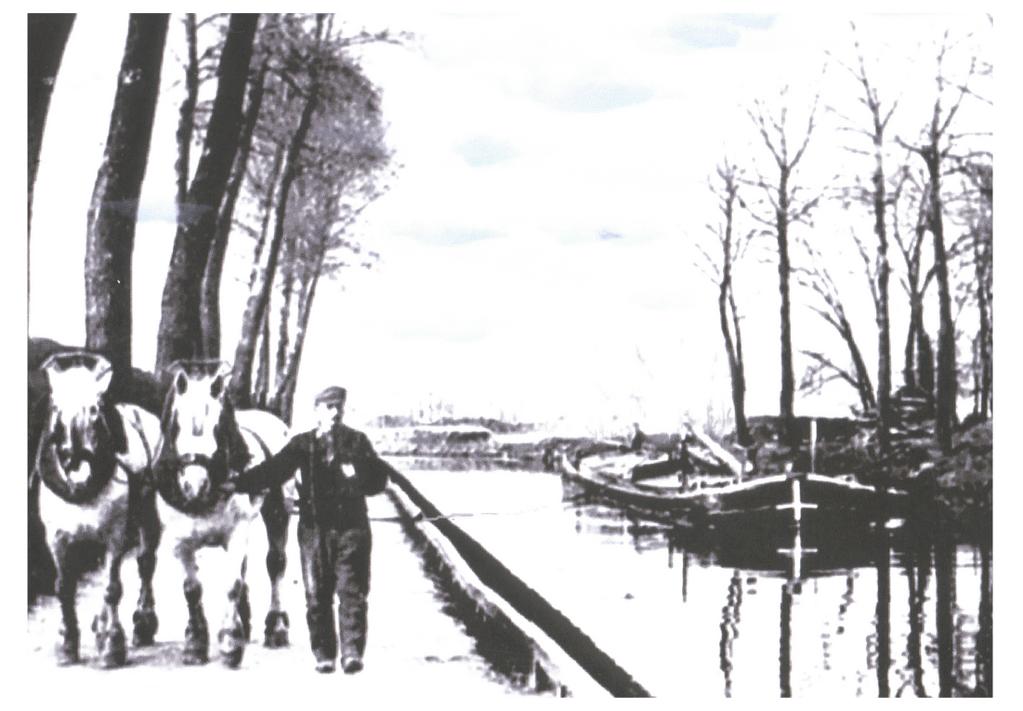
Barge Stop on the Saar

Zerf farm life shown in village museum -
horn planters
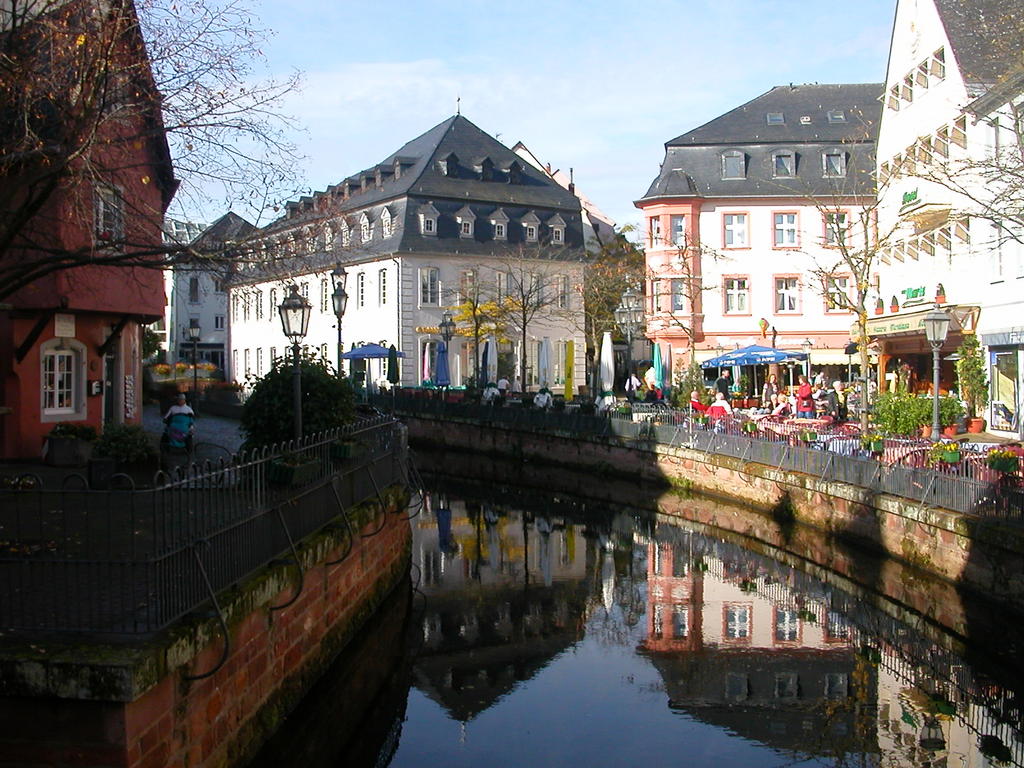
Saarburg mill stream

On June 24 I celebrated an anniversary of sorts - my 7th full year of written posts for "Village Life in Kreis Saarburg". That means that this blog post begins year eight! When I wrote that first post, seven years seemed an impossibly long time to continue my project; now it seems impossible that the time has gone so fast. As these early posts are probably the most neglected, it seems fitting to bring them to the forefront again as part of my personal anniversary observance and as examples of ways to learn family history from less used sources.

My very first post on this blog was about Easter customs in the Hunsrück area of Germany. I bought a small recipe book, self-published, in a bookstore and it was a treasure. In searching for traditional recipes my ancestors might have enjoyed, i found not only recipes for Easter dinner, but also a gold mine of information about the traditions that went along with the recipes. For instance, children began to gather moss from the forests about two weeks before Easter so that they would have enough for a soft nest. The night before Easter, the moss nests were carefully placed in the garden, thus inviting the Easter Hase to lay its eggs there. But what if it rained on the evening of Easter Saturday? The children brought the nests inside and placed them in the kitchen, using a little willow basket to help keep the moss in nest-shape form. Recipe books can be a great source of information! 

My next four posts were written about a visit to a small village museum in Zerf, Germany. This dusty little museum was crammed full of farm implements, furniture for the living spaces, tools, baskets and buckets carried to the fields, harnesses for the ox, horse, or cow. There was even a reconstructed stone bake oven. That museum was the labor of love of one man in the village. When he died, the museum was kept closed unless one applied for permission to see it. The mayor kept the key in his office. Luck was with me when I visited because a local resident procured my entry. I had a guided tour from the mayor and his wife, and was given a guide to items in the museum. Because they knew I was coming, the mayor's wife had hand typed it especially for me. Through the blog, I was able to share that guide, along with the pictures I took, since much of what was inside that large room would be very similar to other village museums all over Germany. And there are many almost-forgotten museums in every state in the United States. When visiting the places where ancestors lived for a time, it is wise to ask if there is an almost forgotten museum. One of my favorite souvenirs of that day in Zerf was the tiny wooden peg I was given. Such pegs were used in place of a nail by the shoemaker when constructing the sole of a shoe.

I wrote three posts about wedding customs. My little Hunsrück recipe book - mentioned above - had the ingredients for traditional dishes served at a wedding meal in a location near Kreis Saarburg, Germany. It also included some traditional Hunsrück wedding customs in addition to the recipes for wedding dishes. On two other visits to Europe, I had stumbled across books that included the wedding lore of Normandy and weddings in Bavaria. So I included two other posts as a comparison to the Hunsrück wedding celebration. It was interesting that very far-flung areas had many baptism, marriage and death ceremonies and customs that were similar, something good to know when one is unable to find the "perfect" social history of the ancestors' town. A lot of the birth, marriage and death rituals in other parts of Germany, especially if the same religion was practiced, can be described (with proper notation) when writing a family history. There is more chance of being right than being wrong.

The history of Saarburg, Germany, which is the equivalent of a county seat in the US, was the subject of another early post. A German city which is designated a Kreis is one where the officials, who were a step above the local mayors, had offices and where most of the residents of the small villages had to travel when legal matters complicated their lives. The growing middles classes were likely to live in the Kreis or county seat in the 19th century. There were also owners of mills, tanneries, inns, and a great number of shopkeepers, since a city that could call itself a Kreis was a market town for cattle, produce, etc. My ancestors, I am sure, made a trip or three to Saarburg, sometimes to buy what they could not barter in their small village; or to sell produce. After the market closed for the day, there was an opportunity for the visiting villagers to observe the way of life in the "big city"- in what to them must have been a place of fascination. While there may not be that special book about your ancestors villages, there undoubtedly is some published information about the county seat or a larger city nearby, whatever it was called.

My grandmother had told me that her grandfather was a sailor, a story I dismissed as fictitious until I grasped the concept that a sailor did not necessarily sail on the ocean. The men who transported cargo in the unglamorous barges going up and down the Saar River were also sailors/seamen. The craftsmanship and ability necessary to build and sail the barges was greatly respected in Saarburg and the neighboring villages. It was a proud profession passed down from one generation to another, and it is doubtful that grandma's grandfather, Johann Meier, came from one of these families. But was he a hired "sailor" or one of the Halfen? As if to lend credence to Grandma's story, Johann still owned his own coil of rope, the kind used for pulling the barges, which he sold to a sailor from Beurig before leaving for America. It's always wise to take family stories with a grain of salt, but don't overlook the kernel of truth in the process. 

Some people believe that local customs have to be learned from the people who lived at the time. With today's quick-changing technology, it may seem that memories of the way life was lived told by parents or grandparents can't help much in recreating the lifestyle of great-grandparents and their parents. It's easy to forget that customs changed much more slowly even 50 years ago, and that a parent or relative or even a careful listener of one's own generation may have a head filled with details and tales a genealogist has never heard. All you have to do is ask. That's why I recorded every detail that Ewald Meyer and his wife Helena described about earlier times in their village of Irsch. Sometimes we were discussing customs from their lifetimes (more than a hundred years later than the period at which my great-great grandparents had lived there). It didn't take me long to realize that, from their reminiscing, I could learn about traditions which were observed in much earlier times. Using those notes, I wrote the blog post, "Of Apple Wine, Cabbage, and Other Everyday Things."

Yes, I've learned a lot about the Rhineland villages of my ancestors right from the beginning of my posting. Organizing my information well enough to make it clear to a reader often showed me anomalies that I would have missed otherwise, and even better, new thoughts occurred that put me on the track of more and more resources. Some of those documents and pictures I had never dreamed I would hold in my hands. And writing this post about my 2005 posts shocked me too. It reminded me how quickly I forget; how much I've already forgotten. Thank goodness for celebrating anniversaries!

Monday, January 24, 2011

Ring Joyfully, Oh Bells

Millet's painting, "The Angelus" 


The Sound of the Bells.

In the 19th century, the bells of Catholic churches throughout Germany and the rest of Europe, rang each day to call people to religious observances of many kinds.

The painting above is simply called "The Angelus" and reflects a religious custom as it was observed in France at the time of the artist, Jean-Francois Millet.  Three times a day - in the early morning, at noon, and finally in the late afternoon or early evening, people were called to prayer by the bell/s in the tower of the church.

Because the bell was such an important part of the religious observances of the people and also a reminder to them of the presense of God in their daily lives, the Mabilon bell foundry in the little town of Saarburg played a major role in the history of our ancestors. 
The Mabilon Bell Factory in Saarburg

The Mabilon Family of Bell Makers

From 1770 on, the Mabilon bell factory produced the bells not only for bell towers in the surrounding villages but also for large churches all over Germany and beyond.   It was still a functioning bell foundry in 2002 when I lived in a nearby rental apartment for three weeks; but it had stopped production and become a unique museum by the time I returned in 2004.  The youngest descendant of this family of bell makers was ready to retire and there was no one to continue the production of Mabilon foundry bells.   Yet the buildings remained open to give visitors a chance to experience the complexity of a trade and art form that was fast disappearing all over Europe.

The Mabilon family of bell makers dates back to the 16th Century in Anjou, France.  By 1770, Urbanus Mabilon had established a permanent place for his bell foundry - in Saarburg outside the city walls.  This is where his descendants continued to make bells for more than 230 years, never revealing the secret of the art of the shape and sound of a Mabilon bell.

The site for his bell factory was the long street called simply "Staden."  It was a location that boasted proximity to the Saar River ports of the barge makers of the town. The site provide easier transportation of the finished bells and also close proximity to the barges loaded with the coal and ore he needed delivered to do the firing of each bell.  The clay deposits on the opposite side of the river gave Mabilon much of the material he used in the making of the bells.  Urbanus Mabilon married Anna Maria Stocky, the daughter of the Saarburg bell-maker Johann Wilhelm Stocky, and the marriage united the two bell-making families.

St. Antonius in Trier
The Mabilon foundry cast bells for major churches, such as the five bells for the parish church of St. Anthony in Trier; and also for the small village churches such as Schoden, Palzem, Piesport and Wincheringen.  Urbanus introduced rich Rococo bell decorations and often added the bell and cannon seal from his coat of arms.

The Bell Foundry Museum

Although the last bell was cast in 2003, the Saarburg workshop looks as if the master and his helpers are just taking a short break.  It is, in fact, Germany’s only bell foundry museum.

Because of the foundry's perfect state of preservation, it is a unique historical witness to its era. When the church and chapel bells ring in the towns and in the countryside, few are aware of how much skill and craftsmanship, care and effort, are involved in casting a bell. The art of the bell maker, practiced by only a few today, is one of the most exceptional and most time-honored professions, and one which the famous German poet, Friedrich Schiller honored with his world famous poem” The Song of the Bell.”

"What in this pit, with hidden powers
the hands with help of fire create.
High up in yonder belfrey-tower,
will speak of us in tones elate."

The Bell Mold is Prepared

Schiller's lines of poetry are better understood when one learns the skill that goes into the making of a bell.  The core or inside of a bell is prepared with semicircular bricks, which are coated with clay. The core is formed with the help of wooden" ribs" in the shape of the bells profile. Once finished, the core mirrors the interior of the bell.
Bell molds

The core is dried by a fire, which is lit underneath its hollow inside. Then the shapers or molders, who normally are highly trained experts, apply the second layer of clay from which they form, with the aid of the template, a complete model bell which is also known as the" false" bell.  This is followed by another thick layer of clay which forms the cope or outer mold. After all three parts are completely dry, a pulley is used to hoist up the cope.


The false bell is now carefully broken up and the pieces removed. This is relatively easy to do as a coating of graphite or wax had been applied between the individual layers of clay.  Finally, the exterior cope is placed over the core again. In the place where the false bell used to be is now a cavity into which the molten metal can be poured.

For decoration, mirror images of ornamental inscriptions and pictures made of bees wax are applied to the "false" bell-layer, thus leaving their imprint on the inside of the cope. Later they appear clearly visible on the outside of the finished bell.

The finished bell mould consisting of core and cope is then dug firmly into the earth of the casting pit in order to prevent the invlowing metal from breaking the mould.  By the time the form is firmly covered and embedded in the earth, the bell-metal, composed of 78 parts of copper and 22 parts of tin, is already melting in the furnace.

The Religious Ceremony when the Bell is Cast

The casting itself is a dignified and moving event.  The clergyman who ordered the bell and members of his parish gather around the casting pit during the bell casting. Just above the fireplace is a niche.  A candle burns next of the statue of St. Joseph – an unbroken tradition since time immemorial. A dignified silence reigns; instructions are given in low voices already reflecting the atmosphere in which the bell will soon perform its duty.

Meanwhile, the craftsmen have taken up their positions at the casting.  Clay-made gutters and canals lead from the furnace to the individual bands of the bell mold. Everything is prepared for casting.  In the dim light of the workshop the priest and the master bell makers say short prayer asking God to bless the men’s work and make the cast a success.

Then with the words “in God’s name” the master bell maker knocks the plug out and the freed white hot glowing mass finds its way, bubbling and sizzling, to the bell mold under the earth. In a muted voice the master gives the few necessary instructions to his helpers. Hissing, the hot air escapes in a blue green flame through the “windpipe” of the mould. Within a few minutes the cast is completed. A gurgling sound indicates that the cavity left by the “false bell” is now filled with the molten metal. A grateful prayer and a moment of silence complete the casting, a truly unique experience.


It takes a few days for the mold to cool enough for the bell to be removed from the pit. When it first appears it is still black and unsightly, but with the help of some sand and water it soon gains a beautiful silver grey gloss. Only the clapper needs to be attached and the bell is ready for installation, but not before the bell expert concludes his expertise on the accuracy and pureness of the desired tones, ensuring that the bell is a real tribute to the master, his helpers, and their skills.


Sources:
Information sheet from Museum Bell Foundry Mabilon, Staden 130, Saarburg
Saarburg: Little Venice on the Saar River, http://flyhahn.com/cities/Saarburg-travel-guide.htm#topnav
1000 Jahre Saarburg, 964-1964, Buchdruckerei Wilhelm Rassier
 Schiller's "The Song of the Bell and other Poems," translated by Thomas C. Zimmerman

Tuesday, November 30, 2010

A Very Special Tour and Tour Guide

My vacation apartment's door (Erdenbach Strasse, Saarburg) is to the left of the garage door.


As I told you in September, I was planning to do some novel writing.  In the interests of home safety, I did not mention that I had reserved a vacation apartment in the city of Saarburg Germany as a wonderful way to inspire chapters for my novel.  A wise woman once told me that to improve my inspiration, I should go to my home villages, sit on the ground, and listen while they talked to me.  I'm a bit too old and my back is too touchy to do that literally, but I found that once I was in Saarburg, ideas for chapters came into my mind very easily - unlike the puzzlement I was experiencing at home.

What I hadn't reckoned with was the number of friends and acquaintances I have made in my past trips to Kreis Saarburg.  There was German hospitality being offered to me from the moment I arrived until the day before I left for home.   I had pictured myself busily writing most of my days in the city.  Instead, I was often having coffee and Kuchen.

On a sunny Sunday, I had a very special tour with a very special tour guide, Ewald Meyer, author of a published history of Irsch and Beurig.  He has been helping me ever since the first day I met him in 2002.  He was also the person who urged me to come back to Germany, offering to again help me with any local research trips I might want to make.

Ewald Meyer, Tour Guide
The tour began in the Beurig's cemetery.  Those who are not family historians will think that a strange place to begin a tour - I did not.  Beurig, about a mile from Irsch, is Ewald's birthplace.  In the Catholic cemetery I saw for myself the impressive monument to Herr Bürgermeister Bodem which I had written about in Sept. 2009, "Herr Burgermeister Bodem and his angel."  The monument was even bigger than it looked in the picture.  

We also visited smaller monuments to deceased officials of the Prussian Government, such as the district foresters and game wardens.  

A forester's grave monument
Unlike ordinary citizens who had (and still have) only a limited number of years to own their cemetery plots, these 19th century Prussian officials still keep their grave sites and monuments in the cemetery today, even if the family line has ceased to exist.    

As we drove through the village of Beurig which is now considered a part of Saarburg, Ewald pointed out Herr Bürgermeister Bodem's very impressive, somewhat Victorian-looking house.  Evidently finding favor with the Prussian government could be monetarily as well as socially and politically important.  Burdensome taxes were levied on the farmers and dayworkers, but even officials and the well-to-do didn't escape taxation.  Houses, including those of Herr Bürgermeister Bodem and his wealthy neighbors were taxed on the number of their chimneys.  Clearly, these houses were designed to show the status of their owners; men wealthy enough to have more than one fireplace.  The office of the Mayor was near the railroad station on the site of today's employment office.  The mayor's office was moved there from its earlier location in the village of Irsch in 1833, shortly after Herr Bodem was appointed Bürgermeister in 1832.

As I described in my July post, (From Bishop's Crosier to Napoleonic Flag), before the time of Napoleonic and then Prussian rule, the farmers, craftsmen, and day workers of Irsch, Beurig and the surrounding villages were governed by the Prince/Archbishop Electors of Trier and then Koblenz.  I had known that the peasant classes paid their "taxes" in the form of produce and farm animals, but not the specifics.  Herr Meyer explained that after the harvest, usually around St. Martin's Day in November, about 10 per cent of a farmer's crops and animals were sent to their Archbishop.  Wagon loads of "taxes" from the villages of the area were sent to the church estate at the edge of the Saar where today's Hotel Keller stands.  There they were housed until they could be sent, by barge, to Trier or Koblenz--depending on the location of the Archbishop Elector of the time.  

Today's Hotel Keller in Beurig on the Saar
In a year when the harvest was very bad, the peasant farmer paid his dues in the form of Frondienst; that is, as enforced service to a Fronherr or lord in lieu of produce.  Probably in this region, the "lord" was a high official of the church or the manager designated by the abbot of a monastery.  

From Beurig, our tour went on to the Catholic Church in Irsch.  The newly refurbished church retains an altar from the 19th century to one side, but the main altar is modern. Several statues from my ancestors' time also remain in various locations in the church.  


Historic Side Altar

Choir view of newly remodeled church
Back on our tour, Herr Meyer pointed out a raised plateau just outside the city limits call the Feuerstatt.  That innocent-looking field was the place where four people accused of witchcraft and found guilty by the Catholic church inquisition, were burned in the 1630s.  One of the women was a midwife.  She would also have used herbs and potions to try to heal disease, making her a prime target for stories of sorcery and probably blamed for the illness or death of a fellow villager.  None of those burned were from Irsch; three were from the small wine village of Filzen and midwife Barbelen came from Kommlingen.  

We peered at the buildings in the oldest part of the village, known as An der Wey, with narrow streets that resemble alleyways.  Here and there, parts of out-buildings made of lime, stones, dab and wattle, have stood the ravages of time and are now combined as part of later reconstructions.  It is a blending of old and new that testifies to the age of the village, which shows up in records as early as 957. 

We also drove through the district of Irsch which at one time was a separate section known as Biest.  It was larger than Irsch until the fire of 1842 in which the area was almost totally destroyed and was rebuilt as a part of Irsch.  

As with all tours, an end comes.  But I was luckier than most tourists.  I was to have "a coffee" with my tour guide.  I was invited to the Meyer home where Helena Meyer waited to welcome me.  

Coffee and Kuchen with the Meyers
Above is a fruit torte (grapes, mandarine oranges, and raspberries), baked and served by Helena Meyer after our afternoon tour of Beurig and Irsch.  It was as good as it looks.  

If I could, I would appoint Herr Ewald Meyer as the official historian and tour guide for the villages of Irsch and Beurig and Frau Helena Meyer as a five-star baker of Kreis Saarburg.  

Source
Conversation with Ewald Meyer and information from his books, Irsch/Saar: Geschichte eines Dorfes, and Beuriger Lese - und Bilderbuch, co-authored by Bernd Gehlen

Monday, January 21, 2008

Washday By Hand


Hans Dieter and Margret Jung in the garden of Haus Jung

My curiosity about the way in which women washed and dried clothing in the 19th century - methods, how often, time spent - began when my sister and I rented a ground floor vacation apartment at the Haus Jung in Saarburg in 2002.

In no time at all the Haus Jung had lived up to its claim as the "friendliest Gasthaus in Saarburg." Margret and Hans Dieter Jung treated us like old friends, even though we had never met before, and I spoke German at about the same level as their five-year-old granddaughter. In addition these welcoming landlords had never rented their comfortable vacation apartment to English speakers before. They had taken the chance that all would work out even though they spoke no English.

To my surprise, I learned that Herr Jung had a hobby that fit perfectly into my search for information about the lives of my Saarburg area ancestors. He was a serious and skilled collector of old postcards from the Saarburg region. He showed me a part of his album collection and then suggested that I might also enjoy seeing some of the postcards that he had scanned into his computer.

That afternoon I saw a picture show of the "old" Saarburg; the city as it was in the late 19th and early 20th century, before much of it was changed forever by World War II and by modernization. It was like taking a virtual trip back in history. Herr Jung explained each picture on the computer screen, pointing out the places that today are reconstructions, those that no longer exist and those which still stand much as they always have.


Near the banks of the Saar River and the Leukbach stream on washday

In one of the picture postcards, something lay on the ground, looking a bit like patchy snow. Herr Jung told me that the village women placed the laundry there because the bank was close to the stream that runs through Saarburg and also to the Saar River. I was amazed.

With my limited vocabulary, I couldn't understand his more detailed explanation of the scene. But the postcard picture stayed in my mind. And with the help of three books in my collection, I've acquired a much clearer idea of what washday meant to women of the past - those in Saarburg and in neighboring parts of Germany and France. From a children's book on the customs and traditions of German Lothringen, (now Lorraine, France); from an English language guidebook to the Roscheider Hof museum at Konz; and from a book about the history and customs of Westphalia, near Munster, I came to appreciate my automatic washer and dryer as never before.

"The Big Wash" in Lothringen

There was always in Lothringen, says the author of Landleben im Jahreslauf, a "big wash" in the spring which had to take place before Easter. During the long winter a mountain of "white" wash had collected. On the day of the wash, the kitchen or the bakehouse began to bustle with life.

Water was heated in the big pot which was more normally used to prepare feed for the pigs. The dirty wash had already been put in a large wooden laundry tub and covered with a bedsheet. Ashes, which had been saved from the fireplace all winter long, were sprinkled on the top of that bedsheet.

When the water in the pig-food kettle was hot, it was poured over the ashes by the housewife so that the solution of wood ash (lye) and the water could permeate the layers of wash. The contents of the tub were swished back and forth; then everything was left standing until the next day.

On the second day of the big wash, all of the wet wash was put into a wheelbarrow and taken to a washhouse, usually located in the middle of the village. (I've been told that the washhouse was not common in Germany, but have read that there were, at one time, washhouses and women for hire to do laundry, along the Seine River in Paris).

Whether at the washhouse or near the river, the women, knelt, beating the laundry with washing paddles. In addition, they rubbed it, rinsed it and wrung it out until it was white again. As they worked, the women found time to chat and gossip, the sounds of their voices heard far into the village. With wet skirts, reddened hands and tired arms, the women then made their way home.

When the wash was dry again and had been ironed, the women would put the laundered items back into a peppermint and absinth scented oak chest. The next wash would take place after the summer work was finished and there was once again time for another strenuous washing.

From the Roscheiderhof Museum Guide

The writer of the guide points out that, in order to be a judge of what a woman's job of laundry involved in earlier days, you have to imagine the many stages of the wash days as they were practiced right up until the 1950s. Much time and energy were required, and it took far longer than in modern times, before the laundry once again lay clean in the cupboard. For this reason the white wash was generally only done twice a year. This is the same as the "big wash" in Lothringen.

Why only two times a year? For one reason there was far more important work to do in the summer. Another reason was that the mild days of spring and early summer were used for a "general cleaning". The months between the two laundry days were tided over with supplies from the "laundry cupboard." This explains the large number of bed linens contained in a proper dowry. The colored items were cleaned every four weeks because the laundering process was not so labor intensive and because there were not so many of them.

Women washing clothes on the river bank in Saarburg

there was a stream or river near the village, this made rinsing the laundry much easier. The washerwomen rubbed the laundry and kept brushing it out in the running water. On farms washing with wood ash, rinsing in running waters and bleaching on the fields were still usual well into the 20th century. However village women began to have some form of ringer washer and wash tubs. Village wash was hung out to dry. Right up until the 1950s the white wash was then placed on the mown grass to bleach. This was the process shown on Herr Jung's postcard that had so intrigued me.

Washdays on a Large "Hof" in the Upper Rhine Country


In the Münster region on the upper Rhine, the farms were larger than in the Saarburg or Lothringen areas. Inheritance laws here favored the eldest son; the land traditionally was not divided among all the children as in those regions where Napoleon had declared all children equal heirs to the property of their father.

The book Damals auf dem Lande explains that the wash was done monthly and each time there were days of hard work that took place. On a large farm, there were not only family members, including unmarried relatives and elderly parents, but also a number of serving maids and laborers who lived on the premises. The clothing of everyone who lived on the farm was part of the pile collected for a wash process that went on for days.

The labor was similar to the methods already described. Garments were soaked in wood ash or some other type of lye mixture. A fatty soap was used for the strenuous rubbing of every item, especially parts of garments that were heavily stained. In addition, all the water for the washing had to be gotten from an inside or outside well; then carried to the wash tubs and to the large water-heating kettle which at other times was the container for making slops for the pigs.

Chicken looking for garments to walk on?
The most time-consuming part of washing, as in Lothringen and in the Mosel and Saar areas, involved the white linens. These had to be bleached. After the wash process was completed, the linens were spread in the meadow for a day or more. As the sun dried the linens, it also took out dullness and grayness on the exposed side. Then the linens were turned, and the bleaching process was repeated. Oh the danger! The linens were at risk from tree and plant pollen, the birds overhead, or an unpenned chicken or three. When such disaster happened, tears might easily be shed because the wash had to be done all over again.

The last work of the wash was the rinsing out. Most of the wash was put into a wheelbarrow and taken to the closest stream, a place where one would have flowing water. This rid the clothes of the ash and/or the soap, and it was much easier than doing a rinse at the farmstead, where every bucket of water had to be pumped and carried. On cold days the rinsing in the stream was unpleasant. Icy water hurt the hands, making them stiff, red, and cracked. When it was really cold, women took a container of hot water with them. Periodically they used it to warm their hands. After the rinsing, the wash dried on racks or sometimes also on the ground.

Then came the ironing. Strength and skill were required, especially with the earliest ironing devices. The early Bugeleisen was a monster-sized ironing apparatus. A red-hot iron bolt was placed in a deep hole at the top of the Bugeleisen. This warmed the entire iron. More bolts were kept red-hot in burning coals, ready to be inserted when the current bolt cooled. Another version of the Bugeleisen had a deep cavity, and glowing coals were placed in it. Eventually a smaller and lighter version of the Bugeleisen was used. The Setzeisen (sitting iron) was smaller and lighter. It set on a hot plate to be heated. When the iron was hot, a handle was clamped to it. While the woman ironed, a second Setzeisen was warming on the hot plate.


Many thanks to Herr Jung of Saarburg for introducing me to the history of washday/s and for his generous willingness to search his postcard collection and scan all the postcards showing the many styles of drying and bleaching laundry in his home city for this blog post. Here are a few more.

Laundry day in color


Laundry on washstands on the Saar River Banks


..Will the wash dry soon..


Big wash - big picture of Saarburg

Tuesday, August 23, 2005

Saar River Sailors and Their Helpers


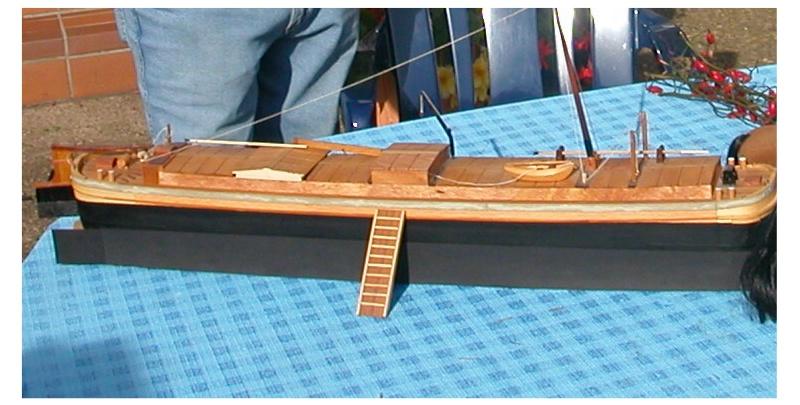
Upper - model of a barge owned by the grandfather of H.D. Jung of Saarburg

Lower - post card in collection of H.D. Jung, Saarburg


Grandma's Story
When I was twenty or so, my grandmother told me that her own grandmother, Magdalena Rauls, had run away from home to marry my great-great grandfather, Johann Meier, who was a sailor. For many years I pictured Johann as a seaman on an majestic sailing ship, a glamorous occupation indeed. No wonder Magdalena was smitten. But when my genealogical research started, I learned that Johann had always lived in Irsch and was listed as a farmer. I wrote the romantic story off as pure fiction.

But as I delved into history books about Saarburg and vicinity, I saw another possibility that gave me a far more likely scenario for Johann or for any man who lived so close to the Saar River. It was possible that as a farm boy who could handle horses, Johann might have looked for extra work on the river as a way to improve his economic situation. Was he a Halfen?

Nickolaus Ritzler in his book, Burg und Kreisstadt Saarburg, says that sailing families lived along the Saar River in Saarburg from the very beginnings of the city and that when the barges sailed, there were always men, known as "Halfen" traveling with them. These were the men who handled the horses that towed the barges against the current. Both of these occupations were held in high respect.

The sections which follow are taken from a village history by Klaus Hammächer called Serrig: Landschaft, Geschichte & Geschichten. In a section called "Earlier Village Life," information from Nikolaus Ritzler, Adam Görgen, and Peter Faas describe shipping on the Saar during the "Golden Age" of the river barges.

The Sailors

According to Ritzler, the sailors from Saarburg dressed in high vests topped by blue jackets. On their heads they wore blue caps. This distinctive uniform, along with their deeply tanned skin, marked them as the men who built and sailed the barges that carried cargo on the Saar. Their homes were in the lower city close to the water's edge, as were the buildings where they carefully fashioned their barges. The names Schulges and Mettloch are especially associated with the boat building and sailing families in Saarburg.

The Barges

The Saar barges were made from solid oak without any blemish, and held together by strong iron nails made especially for this purpose by the local nail smiths. When a newly built ship was ready to make its first trip, there was always a celebration in one of the inns in the lower city, with hardy food and drink for all. Once on the river, the barges carried a wide variety of cargo such as coal, wood, iron, hay, straw, and most kinds of produce. During the many wars over the centuries, the barges also carried soldiers, weaponry, horses and food rations.

The Halfen

The helpers or Halfen, a word that seems to have originated in the region of Cologne, came mostly from the small villages of Irsch, Serrig, Beurig, Krutweiler and Zerf. According to Nikolaus Ritzler, who wrote his account about 1912, the Halfen had broad chests and were usually of middle height. They were easy to identify from their clothing and their walk, a swinging gait which developed from the amount of time they spent riding the strong barge horses. Their arms, too, moved in a distinctive way as a result of swinging a "Peitsche" or whip while they worked.

The dress of the Halfen consisted of white woolen (but not knitted) socks, linen trousers of blue or white, and coarse, strongly nailed cowleather shoes. Under a strong, warm white overjacket with horn buttons, they wore unbleached linen shirts. Headware could be either a black, round hat made of coarse felt, or, when it was cold, a knit "zipfel" cap. This was a sort of a stocking cap worn under the felt hat to protect ears and neck from the cold. Red cotton kerchiefs with white stripes were tied around their necks.

In 1904, Adam Görgen also wrote a description of the Halfen. He said they were healthy, strongly built men of middle size. A humble black hat with a large brim fastened to the head by a thin, colorful cord was their headgear. A blue, red, or white striped cotton cap was put on whenever the other hat was taken off. A red scarf was knotted around the neck and a rough linen shirt covered by a gray or white short linen or "Tirtey" jacket was typical. Their trousers were made of thick, white canvas. Over their jackets, they pulled on a still shorter blue coat and over the stockings that reached above the knee, they wore gaiters. Wool stockings and sturdy nailed shoes completed the outfit.

Gorgen says that when a barge owner needed extra help, he would go to a tavern (most likely in the lower city) to find Halfen. To seal the contract between "Schiffer" and "Halfen", a bottle of wine would be set on the table and both men would drink a glass. Wine was also part of the Halfens' workday. At 10 a.m., a helper received a half quart of wine. At noon and in the evening, the helper was entitled to a quart. When a particularly dangerous stretch was successfully navigated, the Halfen received the so called "wave wine."

No matter the weather, the Halfen would lead the horses along the towpath, if there was one, or ride the horses if the landscape was rough or if their was a ford to be crossed. The horses struggled to pull the barges when the boats were sailing against the Saar's strong current, but they were well cared for and were never mistreated. At the end of the day, the men who handled them were probably as tired as their horses. When the horses faced an especially difficult pull, there was a great deal of shouting by the Halfen as they drove the animals forward. The whip was used then but only when it could not be avoided.

The Trip on the River

Ritzler says that a trip from Trier to Saarbrucken would take about three days. Typically it would involve three or more barges which traveled together. Three horses were needed to pull each of the larger barges. The horses were attached to the barge by means of a strong line attached to the tip of the mast. When the trip began, the sailors would shout "In God's name" and then "Johleit rack". The barges were pushed away from the bank and the horses began to pull. There was a great deal of shouting between the sailors and the men leading the horses. The sound, "juh, juh" signaled the horses. By nightfall the barges had usually reached Saarburg where the sailors and Halfen spent the first night. (The vacation apartment that my sister and I rented when we were in Saarburg was once a barge owner's home; our apartment the sleeping area for the Halfen).

Each day there were also rest stops and during that time the sailors and the Halfen would discuss any problems along the next stretch in the river. Lunch would be carried ashore from the ship and eaten at an inn or tavern, with the landlord providing the dishes, tableware and the wine. The shipowner, of course. paid for the wine that the landlord of the inn placed on the table.

During the trip the sailors and helpers might shout and curse and sometime come to blows with one another, but at lunch time and after there was rest. The men would sit outside, smoke a pipe, and enjoy camaraderie. Once rested, the hard work, shouts and grumbles began again. At night the sailors slept in a "Hef," the Halfen in a strawsack bed and the horses in their stalls aboard the ship.

According to Ritzler, the Halfen were paid cash for each day worked with the shipowners also providing food, drink, and feed for the horses. A lesser payment per day was given to each man for his trip back home. This amount paid for the cost of food, night quarters, bridge tolls, as well as hay and grain for the horses.

Thursday, August 11, 2005

Saarburg - the City and the Landkreis


Top: Lower city
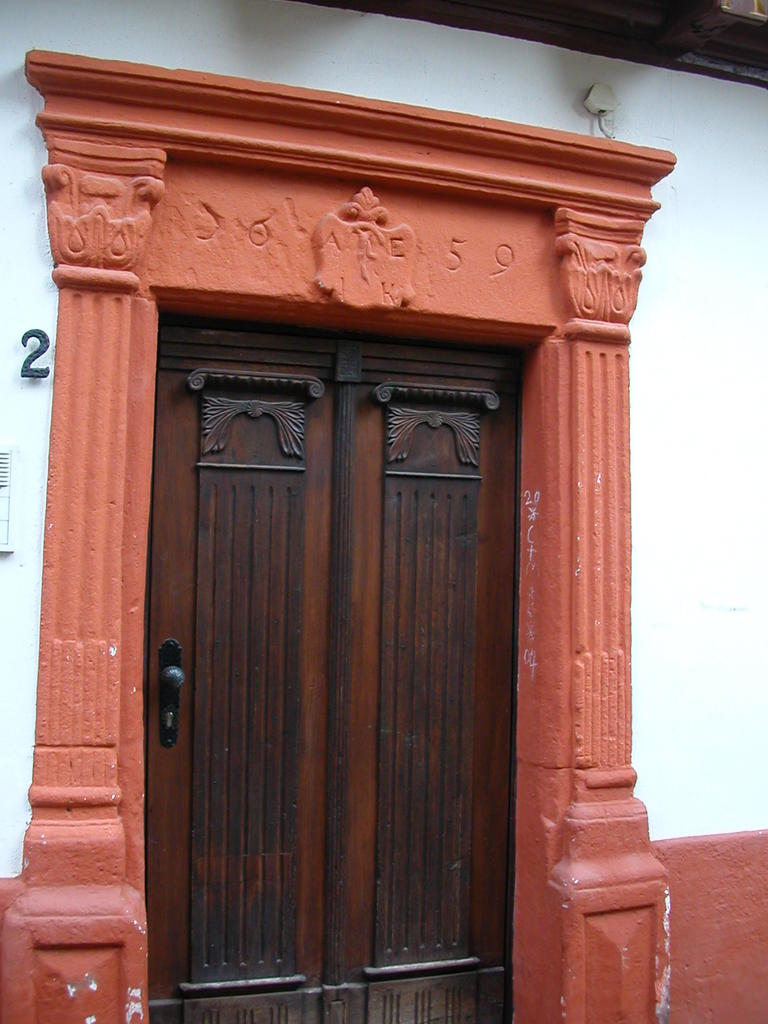
portal from 1659


Bottom: Upper City with
Saarburg's Butter Markt street and the Leukbach.


I made my first visit to Saarburg in 1984. I was not prepared for the rich history and the charm of this small city of approximately 6,100 inhabitants. I took picture after picture on my first trip, and the city has lured me back to it again and again over the years. The Saarburg of today is still the largest city in the Landkreis Saarburg as it was in the 1850's and 60's when my great-great grandparents lived in Irsch, a village approximately 1 1/2 miles to the east.

The Landkreis in Germany is similar to a county in the US, and the city of Saarburg is very much like the county seat with which most of us are familiar. The German word Kreis can mean both "circle" and "district." And just as in our own county seats, the government offices of the Kreis are located in Saarburg.

Founded in the ninth century, Saarburg has both an upper and a lower city. The lower city is situated at the edge of the Saar River. In the nineteenth century it was home to tanneries, boatsmen's and fishermen's houses, the hospital, barracks, wineries, warehouses and taverns. There was a factory that made the bells for some of Europe's largest cathedrals. This Mabilon bell works had moved from France to Saarburg in the late 1700's and continued to cast bells until 2002.

The upper city is slightly newer than the lower city. Houses and shops began to spread up the hill as the city grew. Saarburg was a market town and the markets gave names to streets and squares in both the upper and lower city. There was the horse market, the fruit market, the butter market in the upper city, and the old market in the lower city. The Butter Markt runs along side the Leukbach, a stream which runs through the upper city, then forms a waterfall and drops toward the old city. The waterfall on the Leukbach powered a water wheel for the former grist mill which is now a museum. Above the city stand the ruins of a castle built in 964. All around the city there are steep hills covered with vineyards.

Maybe it was the magic of Saarburg with its powerful waterfall and the castle ruins that made me want to write a novel about my Irsch ancestors, who surely came to this city's markets to sell fruit, butter, perhaps even livestock from time to time. I began to collect as much information as possible about Saarburg as it was in the 1800's.

Last year, in the city's bookstore, I bought Saarburg: Geschichte einer Stadt, vols. 1 & 2, c. 1991, a compilation of articles about the city by various authors. In it I found a goldmine of information about Saarburg in the mid-1800's. Rudolf Mueller, in his chapter, "Geschichte der Stadt Saarburg im 19. and 20. Jahrhundert," (History of the city of Saarburg in the 19th and 20th century) quoted many statistics on the population of 1861 Saarburg as tabulated by the Landsrat Mersmann, the chief administrator of the Landkreis at that time.

Herr Landsmann reported that there were 2,249 residents of the city of Saarburg in 1861, of whom 2,146 were Catholic, 78 were Evangelische (Lutheran), and 25 were Jewish. There were 306 habitations which would mean that the average house held 7.3 persons.

The Landsrat went on to report that there were 7 tanning factories, 15 looms, 4 water-powered grain mills, and 7 brandy distilleries in the city. There was also an oil mill, a tobacco and cigarette factory and a brewery.

The tradesmen and craftsmen were enumerated too. There were 50 fishermen, 9 master bakers, 7 master butchers, 8 master tanners and leather makers, 20 smiths of various kinds (nail makers, knife makers, locksmiths, etc.), 5 master plumbers, 20 master shoemakers, 13 joiners and furniture makers, 7 coopers (cask and barrel makers). All but the fishermen employed helpers and had apprentices.

There were also a few barbers, a stonemason, a potter, a glazier, some masons, carpenters, roofers, and horse shoers, a master clockmaker, some wool spinners, ropemakers, dyers, harness and saddle makers, milliners, men's hat makers, a basketmaker, a bookbinder, a furrier and even two upholsterers/decorators.

In addition to all of the above, there were 40 shopkeepers of one kind or another, as well as three traders described as "herumziehende" which would seem to mean traders who went door to door; 15 innkeepers; 15 tavern keepers, 7 agents, a hauler and 90 boatsmen.

While the statistics above are for just one small city on a river, I would venture to guess that the occupants of most of the small cities along the Saar and Mosel would have had similar groups of workers, shops, and factories during the time when many of our ancestors made the decision to leave all that was familiar and start a new life on farms, in small towns and big cities in Amerika.